
Birthplace of Lager: Exploring the Deep Roots of Czech Beer Culture
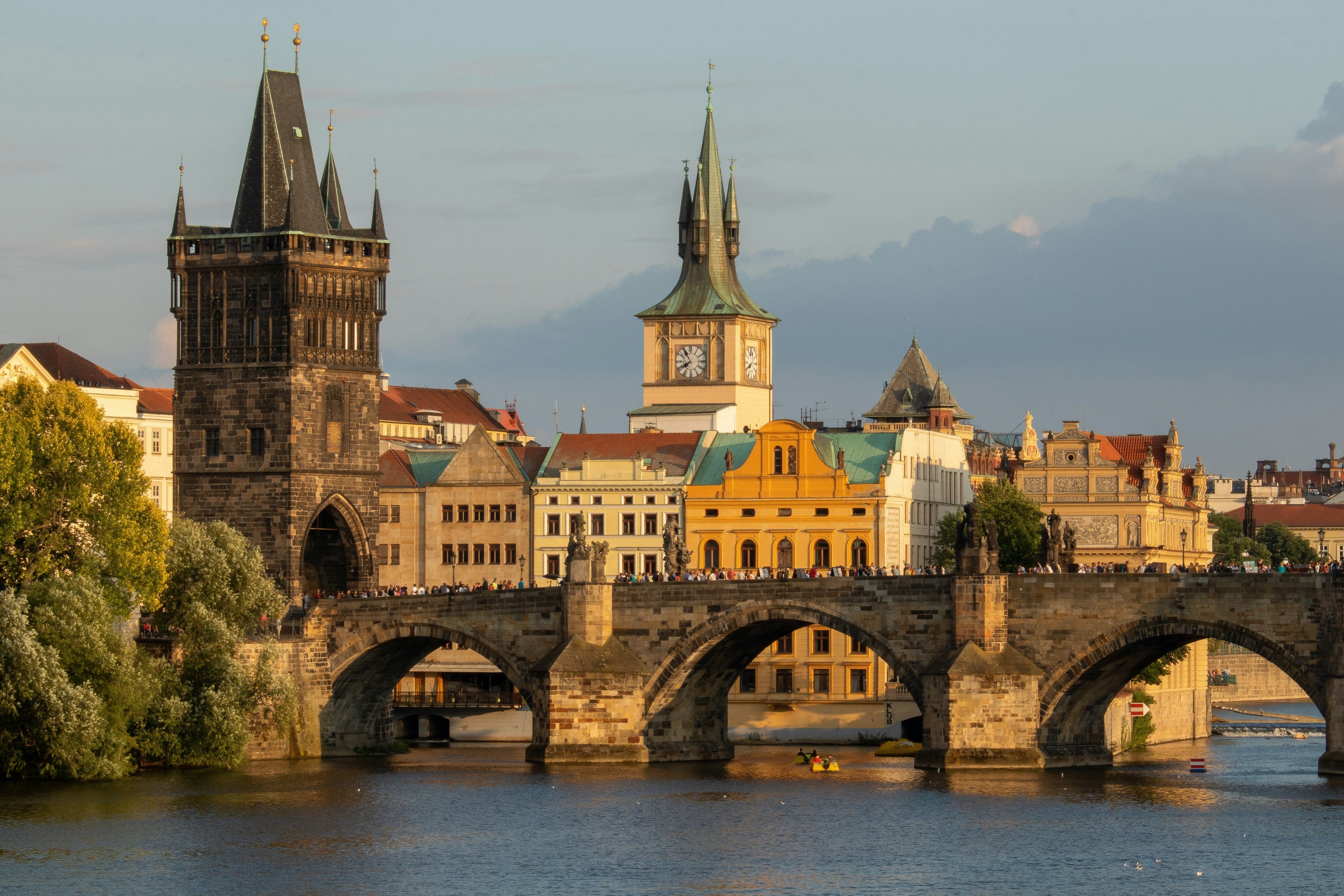
And yes, we are taking an Insiders Experience group there in February.
There are destinations where beer is simply something you order. And then there is the Czech Republic, a place where beer is braided into the nation’s identity so tightly that to understand one is to understand the other.
In February 2026, we’re bringing a small group of travelers into the heart of this story on a journey we’re calling Czech Republic Unfiltered: A Beer & Culture Journey.
Before we go, it’s worth hearing why Czech beer isn’t just good—it’s profoundly meaningful.
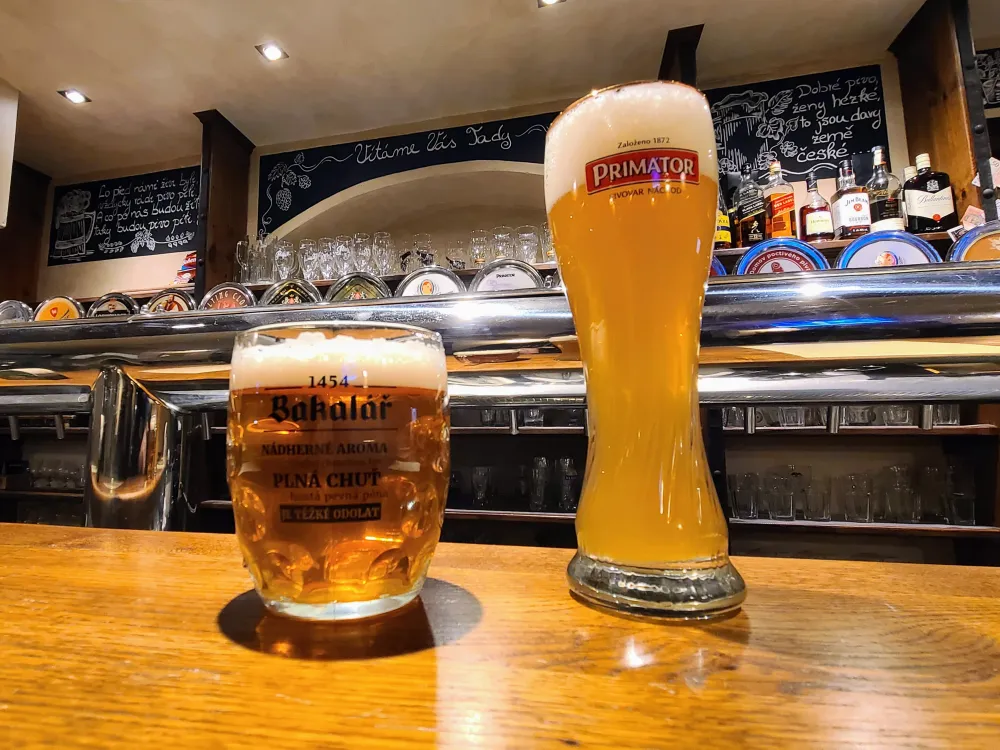
Beers enjoyed at the bar at the Prague Beer Museum.
Beer in Czechia is more than a drink. It is a symbol of continuity, a cultural anchor, and a daily ritual that carries the weight of a thousand years of history. Czechs have proudly held the title of highest beer consumption per capita in the world for decades, but the statistic isn’t driven by excess or novelty. It reflects a country where beer is shared with the same regularity and comfort that others reserve for a cup of tea. In every local pub, you see it: a steady quietness, an appreciation for craftsmanship, and a firmly rooted belief that beer deserves respect.
To understand how this reverence took shape, you travel back to the 12th century, when monks brewed beer in monasteries across Bohemia. They had every advantage nature could offer: fields of clean Moravian barley, soft sandstone-filtered water ideal for delicate lagers, and the now-famous Saaz hops whose gentle, herbal aroma still defines Czech brewing today. By the Middle Ages, brewing was so essential to life here that entire communities regulated and protected it, setting the stage for centuries of innovation.
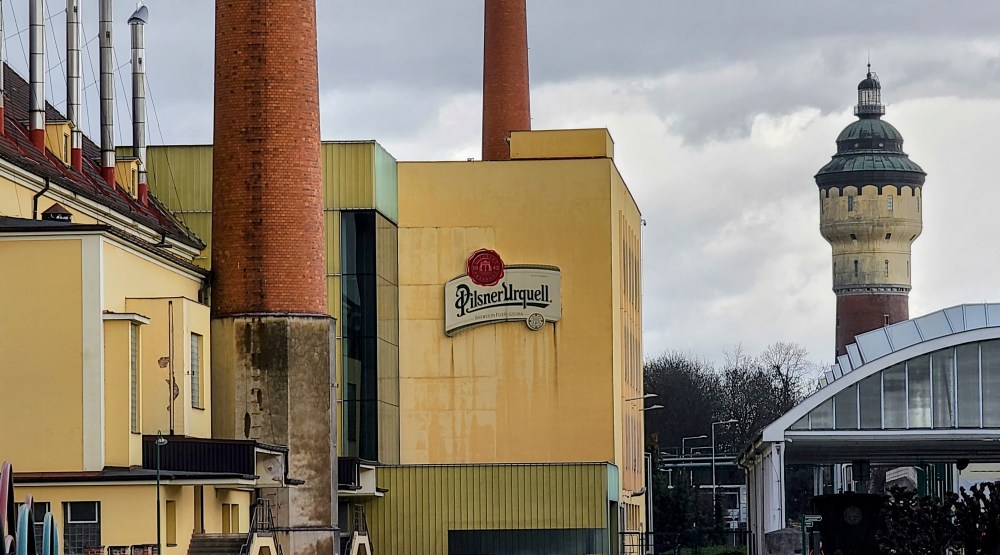
Pilsner Urquell Brewery in Plzeň. Sacred ground for Lager lovers.
But the moment that changed the world arrived in 1842 in the city of Plzeň, or Pilsen in English. It was there that brewer Josef Groll introduced a beer unlike anything Europe had ever seen. Until that point, beer was typically cloudy, dark, and unpredictable. Groll unveiled a golden, brilliantly clear lager that shone in the glass like morning light. Its crispness, its subtle sweetness from Moravian malt, the soft spicy bitterness of Saaz hops, and the long cold maturation in the cellars beneath the brewery created something extraordinary.
That beer became Pilsner Urquell, the world’s first pilsner. In the decades that followed, breweries across the globe tried to imitate it. Today, most of the beer consumed worldwide traces its lineage back to that single breakthrough in Plzeň.
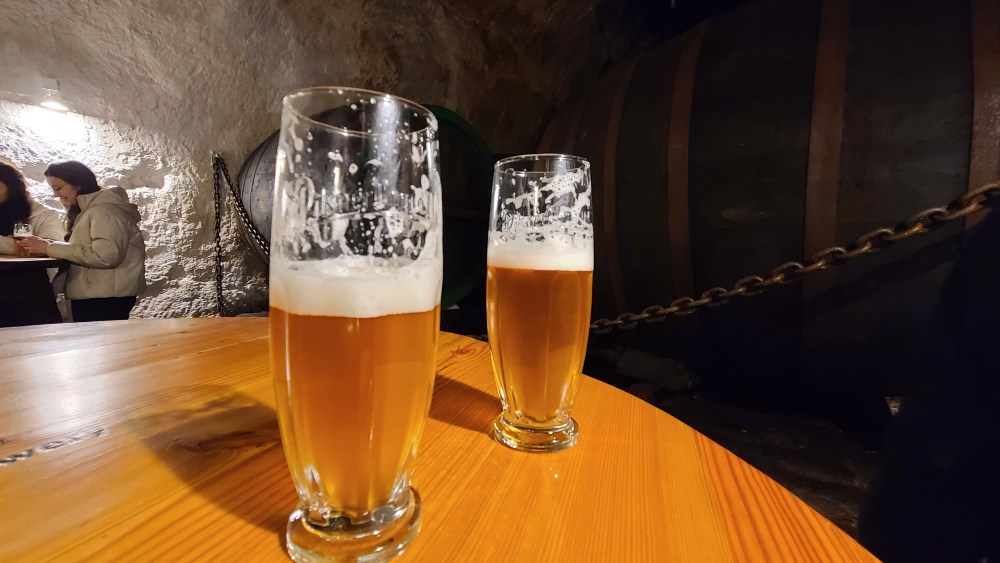
Fresh lager drawn directly from the tanks at Pilsner Urquell.
What’s remarkable is that Czech brewers did not abandon their traditions as others industrialized. They still rely on long fermentation periods, decoction mashing, and whole-cone hops. Their lagers mature slowly, gaining the depth and harmony that have become synonymous with Czech beer. Step into a Czech pub and you immediately notice the difference. The beer feels fuller, creamier, more alive, as if it carries a story in every sip.
Even the act of pouring beer is a craft in its own right. Tapsters train for years to master the distinct Czech pours—a smooth, silky hladinka, a half-foam šnyt cherished by locals, or the sweet, surprising mliko pour that resembles a glass of milk more than a pint of beer.
These aren’t gimmicks; they’re expressions of a cultural relationship with beer that values texture as much as taste.
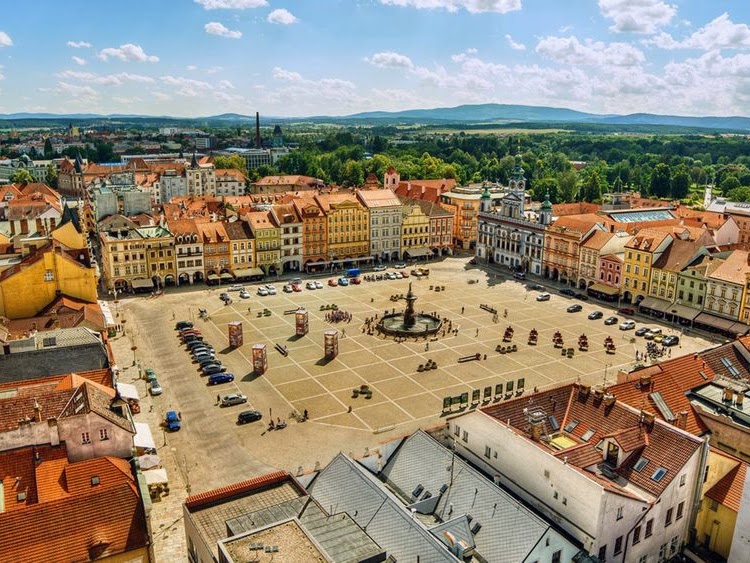
View of the Town Square in České Budějovice.
Another chapter in the Czech beer story unfolds in the city of České Budějovice, home to the Budweiser Budvar Brewery. Its beer is famously unpasteurized, slow-matured, and brewed with immaculate artesian water. Though its name has sparked international debate thanks to its American namesake, the Czech original remains a globally respected symbol of purity and tradition.
Perhaps the best way to understand Czech beer culture is to sit quietly in a neighborhood pub. These spaces feel timeless. Regulars gather at the same tables they’ve claimed for years. A server remembers your face after a single visit. Conversations flow across generations. Politics are debated. Musicians sometimes wander in and play. The act of sharing a beer becomes a ritual of community, a gentle reminder that life is best savored slowly and together.

The Old Town Streets of Český Krumlov.
One of the best places to do that is in Český Krumlov’s Old Town. It feels like a place that time decided to leave untouched, preserving every winding alley and weathered stone for modern travelers to marvel at. The narrow cobblestone streets twist between pastel Renaissance facades, medieval archways, and hidden courtyards where artisan workshops and tiny cafés still hum with local life.
As you wander, the towering castle above seems to watch over every turn, casting shifting shadows that add to the town’s storybook atmosphere. It’s the kind of place where simply walking becomes an experience—each corner revealing another view so charming it feels almost unreal.
That spirit is one of the reasons we’re traveling to Czechia in February 2026. Winter offers a special kind of intimacy here. The tourist crowds thin, the pubs glow with warmth, and the cities feel more like they are revealing their authentic selves. It’s the perfect moment to experience beer not as a trend or an export, but as a living cultural expression.
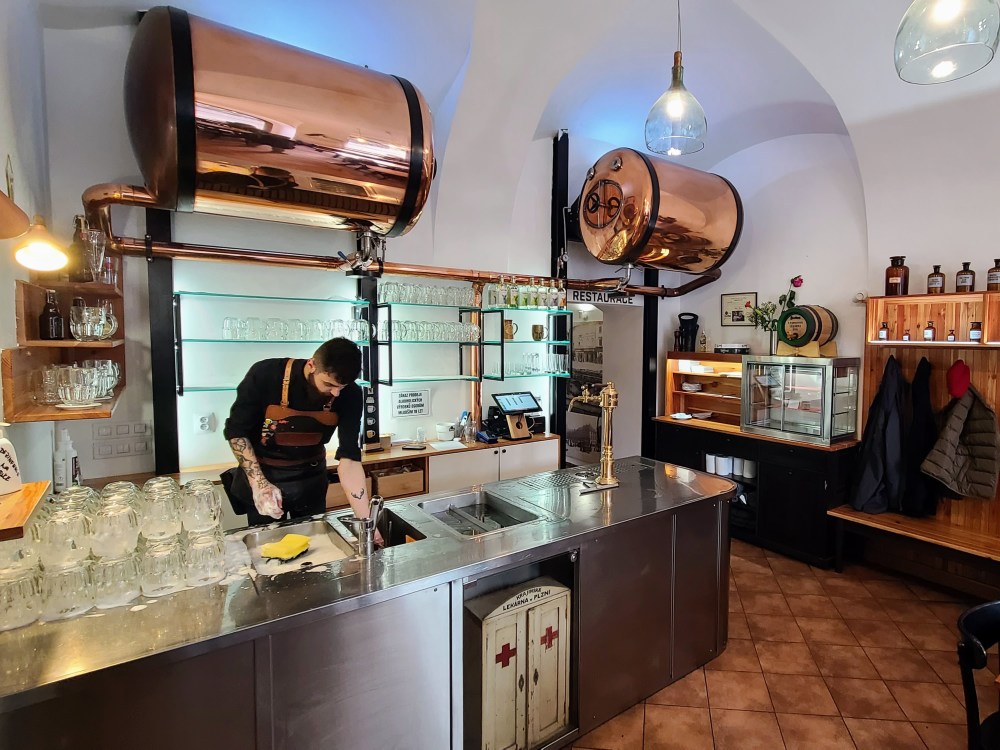
The tankpub at Restaurant Lékárna in Plzeň, Czechia.
Our journey in February draws directly from this larger story. We’ll explore the cities where these traditions were born, taste the beers that helped shape global brewing, and meet the people who carry these practices forward. More importantly, we’ll take the time to appreciate Czech beer as the locals do—thoughtfully, comfortably, and with genuine curiosity.
If this story resonates with you, if you’ve ever wanted to experience brewing history at its source, or if you simply love the idea of exploring extraordinary cities through an authentic cultural lens, we would love to welcome you on this journey.
To learn more about Czech Republic Unfiltered: A Beer & Culture Journey, and to reserve your spot with a $500 deposit, visit the full itinerary here:

Don Littlefield is the President of Brews Cruise.
His personal travels to Prague and the Czech Republic in March 2023 are what inspired the planning and some of the details of this Insider’s Experience trip.
He enjoyed a Schilling Beer Jakobus lager from Littleton, NH, while preparing this post.